
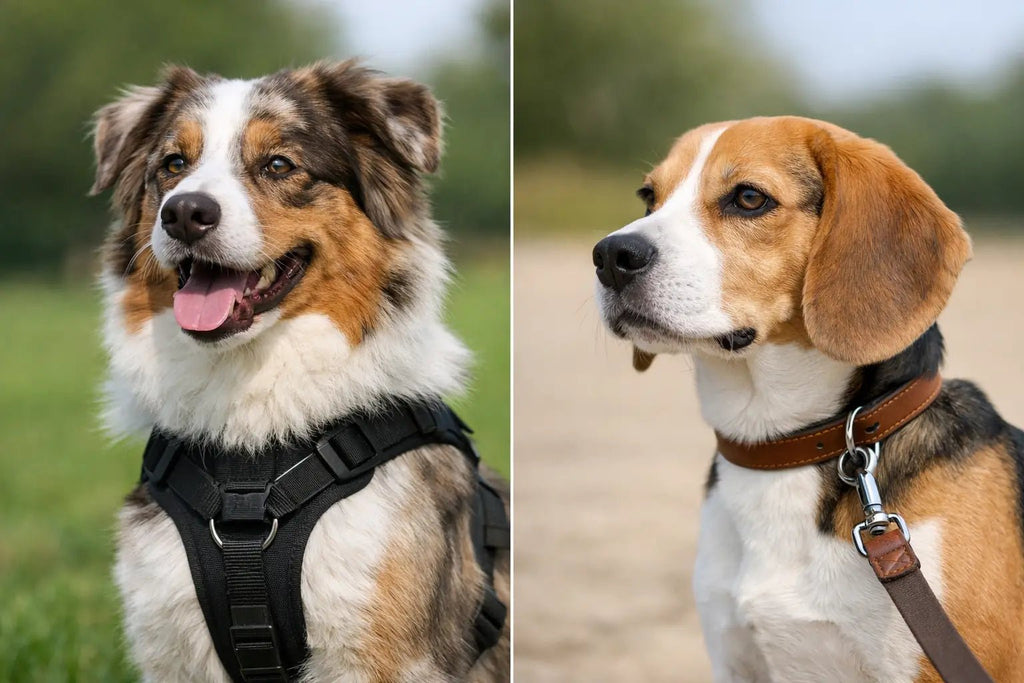
Dog Harness vs Collar: Which Is Better?
The dog harness vs collar question usually comes up right after a rough walk - pulling, coughing, slipping backward, or that moment when your dog spots a squirrel and forgets every bit of leash manners. Most pet parents are not looking for a complicated answer. They want to know what keeps their dog safe, comfortable, and happy without turning every walk into a wrestling match.
The honest answer is that both have a place. A collar is simple and familiar. A harness gives you more control and often more comfort. The better choice depends on your dog’s size, walking habits, health, and personality.
Dog harness vs collar for everyday walks
If your dog walks calmly, rarely pulls, and mainly needs something to hold ID tags, a collar can work just fine for daily use. Many dogs wear collars comfortably all day, especially when the fit is right and the material is soft enough not to rub.
A harness tends to be the better pick for dogs that pull, lunge, get overexcited, or have delicate necks. Instead of placing pressure on the throat, a harness spreads force across the chest and shoulders. That can make walks feel safer and more manageable for both dogs and their people.
This is why so many pet parents switch to a harness after frustrating walks. It does not magically train a dog, but it can make the walking experience more comfortable while you work on leash skills.
When a collar makes more sense
A collar still has real benefits, and it is not automatically the wrong choice. For many families, it is the most practical item for everyday wear because it is lightweight, easy to put on, and perfect for holding identification tags.
If your dog is already loose-leash trained and does not strain against the leash, a collar may be all you need for quick potty breaks or calm neighborhood walks. Some dogs simply prefer the minimal feel of a collar over a harness with more body coverage.
Collars can also be a better choice in hot weather for dogs that overheat easily, since they leave most of the body uncovered. That said, if your dog pulls hard, the convenience of a collar should not outweigh comfort and safety.
Best dogs for collar use
Collars often work best for adult dogs with good leash manners, medium energy, and no history of respiratory or neck issues. They can also be useful as an everyday accessory for ID tags even if your dog walks in a harness.
That combination is common for a reason. A comfortable collar stays on for identification, while the harness comes out for walks and outings.
When a harness is the better choice
Harnesses are often the safer option for puppies, small breeds, strong pullers, and dogs with breathing concerns. If you have ever seen a dog cough or gag at the end of a leash, that is a strong sign a harness may be a better fit.
Small dogs can be especially vulnerable because their necks are more delicate. Flat-faced breeds may also do better in a harness since pressure around the throat can make breathing harder. For larger dogs with lots of enthusiasm, a harness can give you more control without putting all the force on the neck.
Harnesses are also useful for senior dogs or dogs recovering from injury, depending on the design. Some styles offer extra support and can make getting around a little easier.
Best dogs for harness use
Harnesses are a smart choice for puppies still learning leash manners, rescue dogs who startle easily, active dogs who pull, and escape-prone dogs who can back out of a collar. They are also worth considering if your dog has tracheal sensitivity, a collapsed trachea, or any condition where neck pressure should be limited.
The main trade-off is that harnesses need a good fit. Too loose, and your dog may slip out. Too tight, and it can rub under the legs or restrict movement.
Safety matters more than habit
A lot of pet parents use collars simply because that is what they have always used. There is nothing wrong with familiar. But when you look at the dog harness vs collar debate through a safety lens, harnesses often come out ahead for walking.
That is especially true for dogs that pull suddenly. Repeated pressure on the neck can strain the throat and may increase the risk of injury over time. Even if your dog seems fine, a walk that includes constant choking or coughing is not a comfortable one.
Still, harnesses are not perfect by default. Some front-clip or no-pull designs can change a dog’s gait if they are poorly fitted or used incorrectly. A bulky harness can also frustrate dogs who like freedom of movement. The safest option is the one that fits well, suits your dog’s body, and matches the way you actually use it.
Comfort depends on fit, not just type
Many people assume a harness is always more comfortable than a collar. Often it is, but comfort comes down to fit and materials just as much as the category itself.
A soft, properly fitted collar can be comfortable for hours. A stiff or badly adjusted harness can rub the chest, underarms, or shoulders. On the other hand, a harness with padded straps and a secure fit can be a big upgrade for a dog who hates throat pressure.
Look for breathable materials, adjustable straps, and enough room to fit two fingers under the collar or harness where appropriate. If your dog resists wearing either one, the issue may not be the idea of a collar or harness. It may simply be the fit.
What about training?
Neither a collar nor a harness replaces training. That is worth saying clearly because many products get marketed like instant fixes. A harness can reduce strain and give you better handling, but your dog still needs to learn how to walk politely on a leash.
For training, harnesses are often more beginner-friendly for pet parents because they can help you manage movement without yanking the neck. Front-clip harnesses are commonly used for pullers because they redirect the dog’s body when they surge forward. That can make training sessions feel more controlled.
Collars can work during training too, especially for dogs that already have some leash manners. But if every correction ends up at the throat, it can be stressful for the dog and the person holding the leash.
The best training setup is one your dog can wear comfortably while you stay consistent and calm.
Choosing based on your dog’s lifestyle
Think less about which product is universally best and more about what your dog actually does each day. A relaxed older dog who strolls around the block has different needs than a young, energetic dog who turns every walk into an adventure.
If your dog mostly lounges, takes short walks, and behaves well on leash, a collar may cover your needs. If your dog hikes, pulls, startles easily, or loves to zigzag, a harness is usually the smarter pick.
For many families, the most practical answer is not one or the other. It is both. A collar for tags and daily wear. A harness for walks, travel, and more active outings. That approach keeps things simple while giving you flexibility.
How to decide what to buy first
If you are shopping for one item and want the most useful starting point, let your dog’s behavior guide the choice. If your dog pulls, coughs, slips collars, or seems uncomfortable on walks, start with a harness. If your dog is calm, easy to handle, and mainly needs identification, start with a collar.
Try not to shop by looks alone. Style matters, and it is always nice when your dog looks adorable, but comfort and fit should come first. Affordable gear should still feel secure, durable, and gentle enough for daily use.
That is where thoughtful basics make a real difference. Pet parents do not need the fanciest setup. They need something dependable that helps make walks easier and safer without stretching the budget.
A simple rule for dog harness vs collar
If there is one easy rule to remember in the dog harness vs collar decision, it is this: use a collar for identification, and choose a harness for walking if your dog pulls, has breathing concerns, or needs more control.
That rule will not cover every dog, but it fits a lot of real-life situations. And if you are still unsure, watching your dog is usually the best guide. Notice how they move, whether they cough, whether they seem relaxed, and how much control you really have at the other end of the leash.
Your dog does not need the trendiest gear to enjoy a better walk. They just need something that feels good, fits right, and helps you care for them with confidence. When walking gear supports comfort and safety, everyday moments get easier - and that is a win for the whole family.
Related post


15
Jul

13
Jul
