
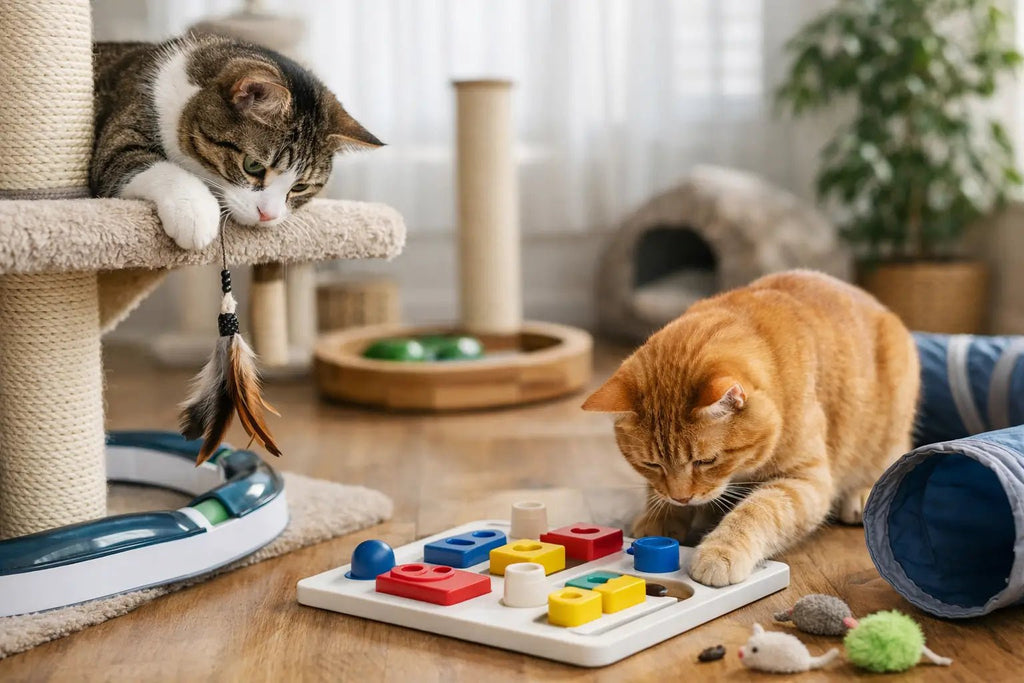
15 Indoor Cat Enrichment Ideas for Happier Days
A cat who races down the hallway at 2 a.m., investigates every grocery bag, or stares intensely at a blank wall is not necessarily being naughty. They may simply need more ways to use their natural instincts indoors. The best indoor cat enrichment ideas make room for climbing, hunting, scratching, resting, and connecting with the people they love.
Enrichment does not have to mean turning your home into a fancy cat playground or buying a new item every week. Small, thoughtful changes can make an ordinary day more interesting while supporting your cat’s confidence, comfort, and healthy routines. What works best depends on your cat’s age, mobility, personality, and home setup.
Why Indoor Enrichment Matters for Cats
Even the sleepiest house cat has instincts that need an outlet. Cats are built to observe, stalk, pounce, climb, scratch, and seek out safe resting spots. When those needs go unmet, some cats become bored, restless, vocal, or overly focused on behaviors like scratching furniture or waking the household before sunrise.
A richer home environment can help your cat burn energy in a positive way. It may also encourage movement, which is especially helpful for cats who spend most of their time indoors. Just as important, enrichment gives cats a sense of choice. Choosing a high perch, a cozy hiding spot, or a favorite toy can make a cat feel safer and more settled.
The goal is not constant entertainment. Most cats also need plenty of quiet time. Think of enrichment as a few meaningful moments and comfortable options woven into the day.
Indoor Cat Enrichment Ideas for Play and Hunting
Make toy time feel like a hunt
A wand toy can be one of the simplest ways to bring out a cat’s natural chase instincts. Move it slowly behind a chair, along the floor, or around the edge of a blanket so it behaves more like small prey. Let your cat stalk, chase, and catch it from time to time. If the toy never becomes catchable, some cats can get frustrated.
Short sessions are usually better than one long workout. Five to 10 active minutes before breakfast or dinner can give your cat a satisfying routine. For kittens and high-energy adult cats, a second session in the evening may help them settle down afterward.
Rotate toys instead of leaving everything out
A pile of toys available all the time can become part of the furniture. Keep a few favorites out, then switch them every several days. A crinkly ball, soft mouse, kicker toy, and plush toy can feel new again after a short break.
Choose toys that suit your cat’s style. Some love chasing light, fast toys across the floor, while others prefer quiet batting or carrying a toy to another room. Avoid toys with loose strings, feathers, or small detachable pieces unless you are there to supervise.
Turn meals into a small challenge
Food puzzles and treat-dispensing toys give cats a chance to work for part of their meal. Start easy. Place a few pieces of dry food in a simple puzzle or scatter them across a clean mat so your cat can sniff and search.
If your cat eats wet food, try spreading a small portion onto a lick mat made for pets, or place small spoonfuls in a few safe dishes around one room. This can slow fast eating and add interest without changing the food your cat already enjoys. If your cat has a medical diet or weight concerns, ask your veterinarian how to adjust portions first.
Build a Home With Vertical Space
Give your cat a view
For many cats, a window is a daily show filled with birds, leaves, people, and changing light. Set up a stable perch near a secure, closed window with a soft blanket or cat bed. The spot does not need to be elaborate. A comfortable place to watch the world can be a big source of calm entertainment.
Be mindful of safety. Check that screens are secure, keep blind cords out of reach, and do not leave windows open where a cat could push through a screen. If outdoor cats cause your cat to become upset or territorial, move the perch to a quieter view.
Add safe climbing choices
Cat trees, wall-mounted shelves designed for cats, and sturdy furniture steps can help cats use vertical space. Height gives many cats a feeling of security, especially in busy households with children, visitors, or other pets.
Senior cats and cats with sore joints still benefit from elevated resting places, but they may need a gentler route. A low cat tree, a step stool, or a ramp can make favorite spots easier to reach. The best setup is one your cat can use confidently, not one that looks impressive but goes untouched.
Create a retreat, not just a perch
A cardboard box with a soft blanket, a covered bed, or a quiet corner behind a chair can give your cat a place to decompress. Hiding is normal cat behavior, and a reliable retreat can be especially valuable during loud weather, holidays, or family gatherings.
In homes with multiple cats, provide more than one resting and hiding option. A single cozy bed may become something to guard. Several choices reduce pressure and let each cat find a comfortable spot.
Support Scratching, Stretching, and Comfort
Scratching is not a bad habit to eliminate. It helps cats stretch, mark their space, and care for their claws. The helpful approach is to give them appealing places to scratch before they choose your sofa.
Offer both vertical and horizontal scratchers, because cats have personal preferences. Place one near a favorite sleeping area and another close to the furniture they already target. A tall scratching post should be stable enough that it does not wobble when your cat leans into it. If it falls once, your cat may decide it is not worth using again.
Comfort matters here too. A soft pet blanket in a sunny spot, a supportive bed in a quiet room, or a cozy place near the family can make rest feel secure. Cats often move between warm, hidden, elevated, and social spaces throughout the day, so variety is more useful than one perfect bed.
Make Everyday Routines More Interesting
Use boxes and paper bags safely
Before recycling a delivery box, let your cat inspect it. Cut off handles, tape, staples, and loose packing material, then place a toy or blanket inside. A box can become a lookout, tunnel, hiding spot, or ambush zone in minutes.
Paper bags can be fun too, but remove handles first so there is no risk of entanglement. Skip plastic bags altogether. The simplest enrichment ideas are often the ones that use what is already in your home, as long as safety comes first.
Try scent-based exploration
Cats experience their surroundings through scent. A small amount of catnip can make a toy or scratching area more exciting for some cats, although not every cat responds to it. Silvervine may interest cats who ignore catnip, but introduce any new scent in a small amount and watch how your cat reacts.
You can also bring in a clean, pet-safe item with a new smell, such as a cardboard box from another room. Never use essential oils or scented products around cats without veterinary guidance. Many common oils and fragrances can be irritating or unsafe.
Give your cat a job during the day
A few pieces of kibble hidden in safe, easy-to-find places can create a mini scavenger hunt. You might place them beside a scratching post, under an upside-down paper cup with an opening, or on a low perch. Begin with obvious spots so your cat understands the game.
For a more social activity, teach a simple target game using a treat and a stick or your finger held at a safe distance. Reward your cat for touching the target with their nose, then gradually guide them a few steps. Training should feel like a choice, never a demand. Stop while your cat is still interested.
Keep Enrichment Safe and Sustainable
The right amount of enrichment is different for every cat. A bold young cat may enjoy two lively play sessions and regular puzzle feeding. A shy cat may prefer a quiet window perch, a hidden bed, and gentle play from a distance. Watch your cat’s body language. Relaxed ears, curiosity, play bows, purring, and returning for more are encouraging signs. Flattened ears, swishing tail, hiding, or walking away mean it is time to slow down.
Check toys, scratchers, and beds regularly for damage. Replace items with exposed stuffing, sharp edges, or loose parts. Keep ribbons, hair ties, rubber bands, string, and yarn stored away, as swallowing them can be dangerous.
You do not need to buy everything at once. Start with one active play toy, one dependable scratching surface, one cozy resting spot, and one simple food-based activity. Souths Pet Supplys makes it easier to build those everyday comforts at a budget-friendly pace, so your cat can have more to enjoy without making pet care feel complicated.
A happier indoor life often starts with noticing what your cat already loves. Follow the cat who watches birds, squeezes into boxes, chases soft toys, or naps high above the room, then offer more safe chances to do exactly that.
Related post



15
Jul

13
Jul
