
Pet Bed Size Guide for Dogs and Cats
A bed that looks perfect online can feel way too small once your pet actually tries to nap in it. That is why a good pet bed size guide matters. The right size helps your dog or cat stretch out, curl up comfortably, and get the support they need without wasting money on a bed that never gets used.
Pet parents usually focus on color, fabric, or how cute the bed will look in the living room. Fair enough. But size is what decides whether the bed becomes your pet’s favorite spot or just another purchase they ignore. A well-sized bed supports better sleep, easier joint relief, and everyday comfort, especially for puppies, seniors, and pets with changing needs.
Why a pet bed size guide matters
Pets do not sleep in one standard position. Some curl into a tight ball. Others sprawl with legs in every direction and somehow take up more room than seems physically possible. That means bed sizing is not just about your pet’s weight. It is also about sleep style, body length, and how much edge space they like.
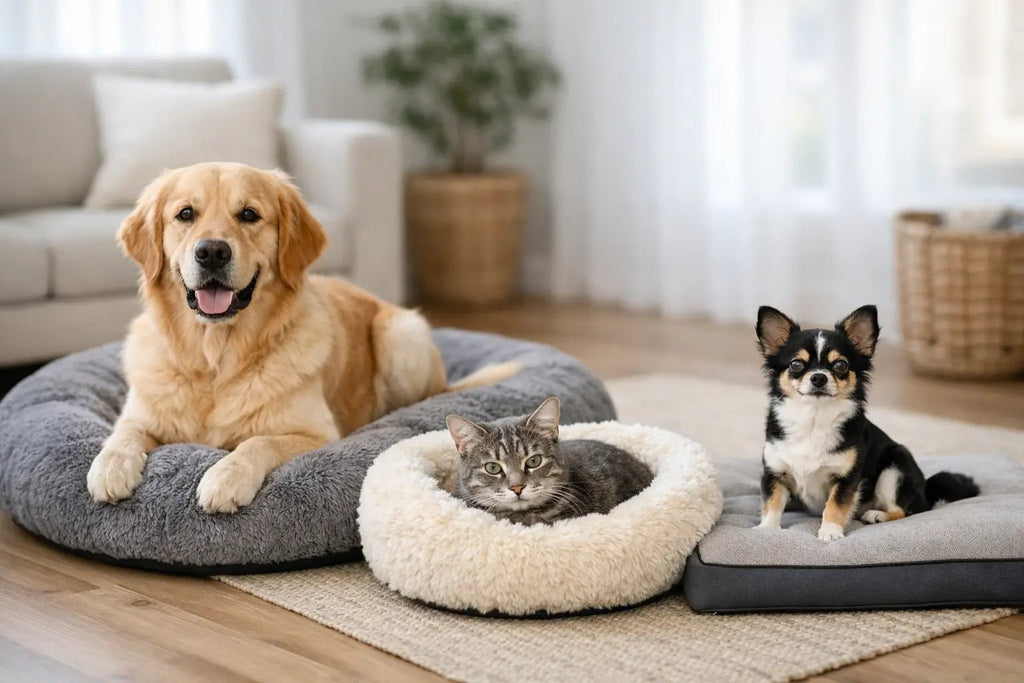
A bed that is too small can force awkward sleeping positions and leave part of the body hanging off the edge. A bed that is too large is not always wrong, but it can feel less secure for pets that like to feel tucked in. Cats and small dogs often love a snug, enclosed feel, while larger dogs may prefer more open space to stretch.
If your pet is between sizes, the best choice often depends on the bed style. Bolster beds, donut beds, and cave-style beds usually feel smaller on the inside than they look from the outside. Flat mats and open loungers tend to give pets more usable room.
How to measure your pet for the right bed
Start with your pet while they are relaxed, not standing at attention like they are posing for school pictures. Measure from the nose to the base of the tail. Then look at how they normally sleep.
If your pet curls up tightly, add a few inches to that body length for comfort. If your pet stretches out, add more room so they can fully extend without slipping off the sides. For most pets, adding 6 to 12 inches to their body length is a smart starting point.
Width matters too, especially for broad-chested dogs, fluffy cats, or pets who sleep on their side. If you already have a bed your pet likes, measure the sleeping surface, not the outer edge. That gives you a more realistic benchmark than guessing from product photos.
Measure the sleeping position, not just the body
This is where many people get tripped up. A 20-inch dog does not always need a 20-inch bed. If that same dog sleeps flat on their side with front legs stretched forward, the usable sleeping space needs to be bigger.
For curlers, a rounded bed can work well even if the dimensions seem compact. For sprawlers, rectangular beds are often the safer pick because they offer more continuous surface area.
Keep the bed’s inside dimensions in mind
Manufacturers often list the overall size, which includes thick bolsters or raised edges. Those features can be great for comfort, but they reduce the actual sleep area. If a bed looks generously sized but has tall padded sides, the inside may fit more like the next size down.
This is especially important when shopping for senior pets or heavier dogs that need full-body support. They need usable space, not just a bigger footprint.
General pet bed sizing by size category
A simple pet bed size guide can help narrow the field fast. Small beds are usually best for cats, toy breeds, and little dogs under about 15 pounds. Medium beds often suit pets from around 15 to 35 pounds. Large beds work well for dogs in the 35 to 70 pound range, and extra-large beds are better for big breeds and giant loungers over that.
That said, weight alone can be misleading. A lean, long dog may need a larger bed than a stockier dog of the same weight. Corgis, Dachshunds, Greyhounds, and mixed breeds with unusual proportions are good examples.
Cats are their own category too. Most adult cats fit comfortably in small or medium beds, but large cats and multi-cat cuddlers may need more room than expected. If your cat likes to knead, turn in circles, and settle dramatically before lying down, a little extra surface area usually helps.
Choosing the right bed shape
Size and shape work together. Even the correct dimensions can feel wrong if the design does not match your pet’s habits.
Bolster beds are great for pets who like to lean, nest, or rest their head on an edge. They feel cozy and secure, but because the sides take up space, it is often wise to size up. Donut beds are similar. They are ideal for curlers but not the best fit for pets who stretch long.
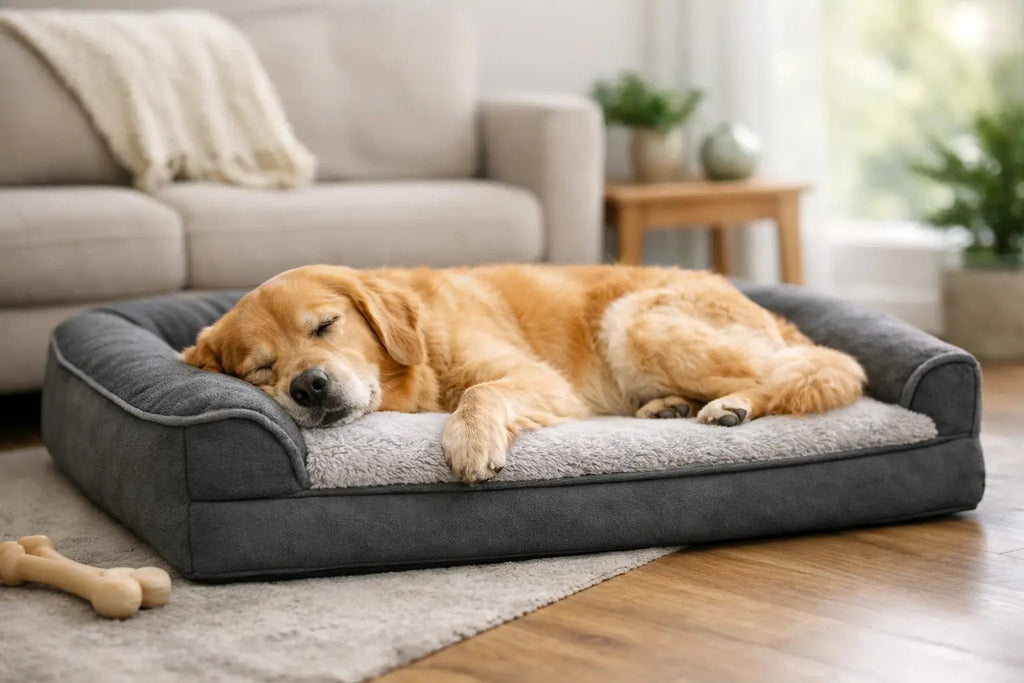
Flat beds and mattress-style beds give the most room for the listed size. They are often a smart choice for larger dogs, senior pets, and hot sleepers who do not want walls around them. Orthopedic beds also usually work best when there is enough room for the whole body to stay supported.
Covered beds and cave beds are popular with cats and smaller dogs that love enclosed comfort. Here, sizing is not just about fitting inside. Your pet also needs enough room to enter, turn around, and settle without feeling cramped.
When to size up
There are a few situations where going bigger is usually the better call. Puppies that are still growing are the obvious one, especially if they are medium or large breeds. Buying a slightly larger bed now can save you from replacing it too soon.
Senior pets also benefit from extra room. Older dogs and cats may shift positions more often, stretch slowly, or need more space to get up and lie down comfortably. If your pet has arthritis or joint stiffness, cramped edges are not your friend.
Size up if your pet sleeps in multiple positions, shares the bed with a sibling, or likes piling in with blankets and toys. A little extra room can make the bed more inviting instead of crowded.
Common mistakes to avoid
One of the biggest mistakes is choosing by breed label alone. Not every Labrador is the same size, and not every cat is a delicate little loaf. Measuring your actual pet is always more reliable than using a generic breed chart.
Another common issue is focusing only on the outside dimensions. A bed can look big and plush, but thick borders can shrink the interior fast. Check the sleeping area whenever possible.
Price can also tempt people into sizing down. A smaller bed may cost less, but if your pet avoids it or outgrows it quickly, it is not really the budget-friendly choice. Comfort and value go together when the bed actually gets used every day.
How to tell if your current bed is the wrong size
Your pet will usually tell you, just not with words. If they consistently sleep half on and half off the bed, hang their legs over the side, or choose the floor instead, the size may be off. Restlessness at bedtime can also be a clue.
Sometimes the bed is technically large enough, but the shape does not match the pet’s habits. A dog that keeps trying to stretch out on a donut bed may need a flatter style. A cat that refuses a wide-open mat may want something with raised sides and a more secure feel.
A simple way to shop with confidence
The easiest path is to measure your pet, think about how they sleep, and compare that to the usable sleeping surface of the bed. If the bed has bolsters, enclosed walls, or thick padding around the edges, be cautious about choosing the smallest possible fit.
For budget-minded pet parents, this matters even more. Getting the size right the first time means less trial and error, fewer returns, and a happier pet from day one. At Souths Pet Supplys, that kind of practical comfort is exactly the point - making pet parenting easier, simpler, and more joyful every day.
Your pet does not care whether a bed is trendy. They care whether it feels safe, soft, and roomy enough for a real nap. Choose with that in mind, and you will usually get it right.
Related post

15
Jul
13
Jul
