How to Pick a Cat Collar That Fits Safely
A cat collar can look like a small style choice, but it has a big job. It should stay comfortable through naps, zoomies, window watching, and all the ordinary moments that make up your cat’s day. Learning how to pick a cat collar starts with safety and fit, then leaves room for the colors, patterns, and details that suit your favorite little character.
How to Pick a Cat Collar for Everyday Safety
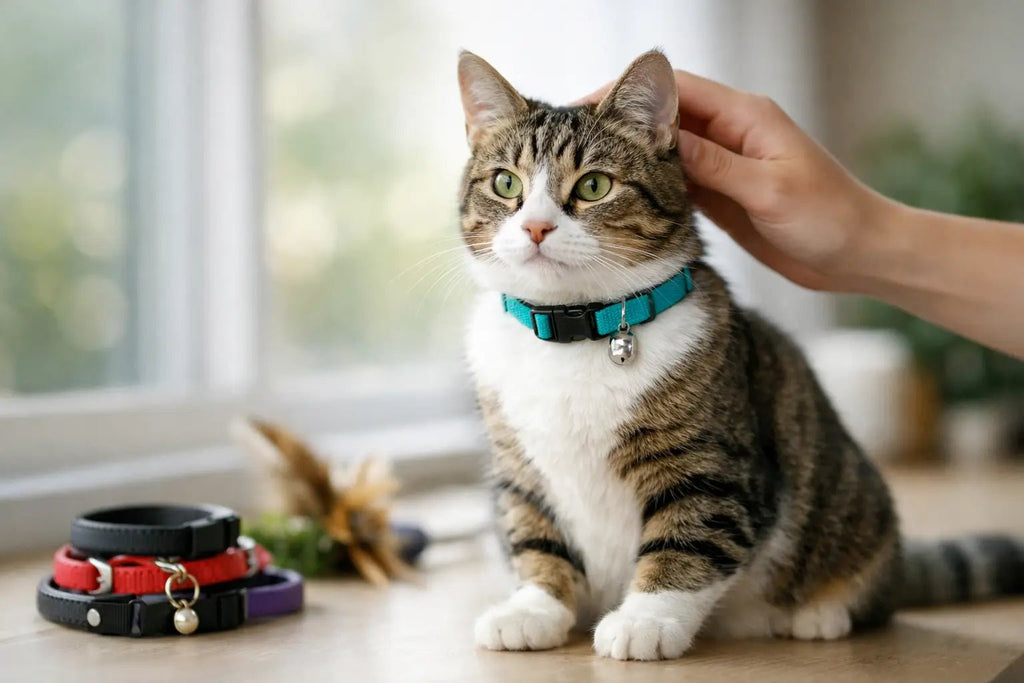
For most cats, a breakaway collar is the safest choice. Breakaway clasps are designed to release if the collar gets caught on a branch, crate, furniture edge, or another object. Cats are natural climbers and explorers, even when they live mostly indoors, so this feature offers valuable peace of mind.
A breakaway collar is especially helpful for cats that go outside, spend time on screened porches, climb cat trees, or like to squeeze behind furniture. The trade-off is simple: a collar that can release can also get lost. That is a much better outcome than a collar that stays trapped on something when your cat cannot get free.
Avoid collars that fasten with a standard buckle unless they are specifically made with a safety release feature. Elastic inserts are sometimes marketed as safety options, but they may not release as reliably as a true breakaway clasp. If your cat wears a collar regularly, choose a clasp you can test gently with your hands before putting it on.
Start With the Right Size and Fit
A collar that is too loose can slip over your cat’s head or snag more easily. One that is too tight can rub the neck, flatten fur, and make swallowing or breathing uncomfortable. The best fit is snug enough to stay in place but never restrictive.
Measure around the base of your cat’s neck with a soft tape measure. If you do not have one, use a piece of string, then measure the string with a ruler. Compare that number with the collar’s adjustable range rather than choosing by a broad label such as small or medium.
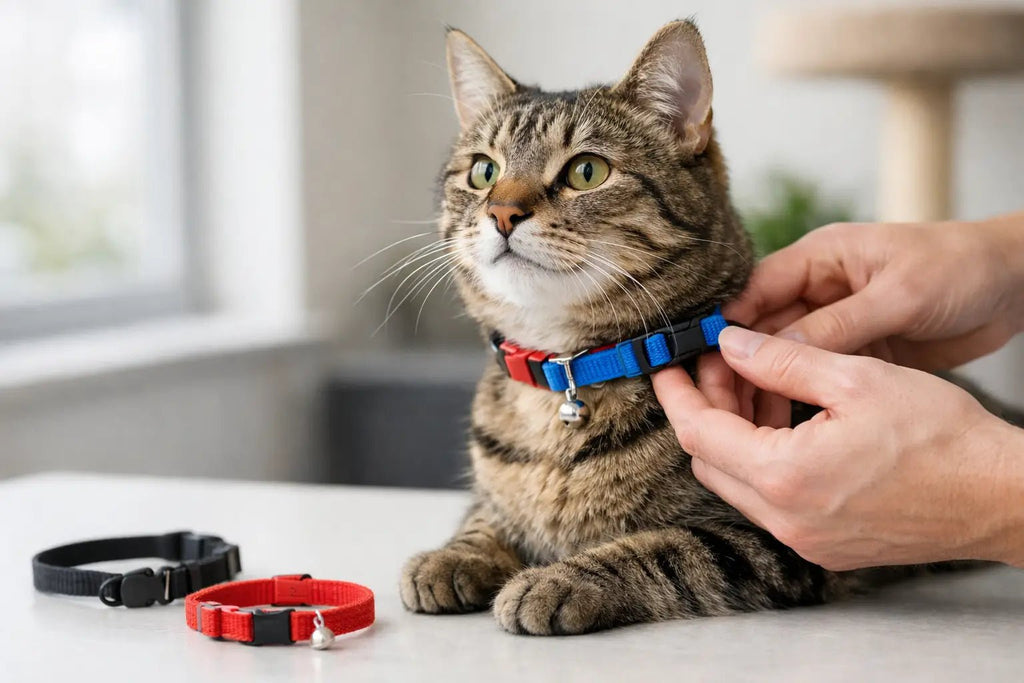
Once the collar is on, use the two-finger check. You should be able to slide two fingers comfortably between the collar and your cat’s neck. For a very petite kitten, one finger may be more realistic, but the collar should still have breathing room and should not leave an indentation in the fur or skin.
Check the fit again after the first few days. Cats can react to a new collar by scratching at it, rolling around, or trying to pull it off. Some of this is normal adjustment, but repeated scratching, coughing, hair loss, or red skin means the collar needs attention. Loosen it, inspect the material, and consider a lighter option if needed.
Kittens Need Frequent Fit Checks
Kittens grow quickly, which means a collar that fit perfectly last month may be too snug now. Check a kitten’s collar at least once a week. Choose an adjustable, lightweight collar with room to grow, but do not leave it overly loose in the meantime.
Even adult cats benefit from occasional fit checks. Weight changes, thick winter coats, and grooming can all change how a collar sits on the neck.
Choose Materials That Feel Good on Fur and Skin
The best collar material depends on your cat’s coat, habits, and skin sensitivity. Soft nylon is a popular everyday option because it is lightweight, adjustable, easy to clean, and available in plenty of cheerful colors and prints. It works well for many cats, especially when the webbing edges feel smooth rather than stiff.
Fabric collars can be extra comfortable and stylish, but look for strong stitching and a washable construction. A collar that absorbs moisture or collects dirt may need more frequent cleaning. Leather can offer a classic look and may soften with wear, though it is usually heavier, takes longer to dry, and needs more care than nylon.
For cats with sensitive skin, prioritize a smooth, lightweight collar with no rough seams touching the neck. Take the collar off periodically to check for irritation. If your cat develops redness, thinning fur, or persistent itching, stop using that collar and speak with your veterinarian if symptoms do not settle quickly.
Width matters, too. Narrow collars are often comfortable for small cats and kittens, while a slightly wider band can spread pressure more evenly on a larger cat. Very wide collars can feel bulky, especially on a cat that is not used to wearing one. A light collar is usually the best place to begin.
Think Carefully About Tags, Bells, and Extras
An ID tag can help a lost cat get home faster, particularly for cats that may slip through an open door. Keep the information short and easy to read. Your phone number is often the most useful detail. A tag should lie flat and have smooth edges so it does not poke your cat’s chest or get caught in fur.
Tags can jingle, however, and some cats dislike the sound or the extra movement. If your cat seems bothered, consider an engraved collar plate that attaches flat against the collar. Remember that an ID collar is helpful, but it does not replace a microchip. A collar can come off. A current microchip registration gives your cat another layer of protection.
Bells are a personal choice. Some pet parents like them because they can hear where their cat is, and they may give wildlife a little warning outdoors. Other cats find the constant sound annoying, especially in a quiet home. If you choose a bell, make sure it is small, securely attached, and not heavy enough to pull the collar down.
Decorative charms, oversized bows, and dangling accessories can be cute for a photo, but they are not always practical for all-day wear. Keep everyday collars simple. Comfort is what makes a collar worth wearing.
Match the Collar to Your Cat’s Lifestyle
An indoor cat still benefits from an identification collar if there is any chance of an accidental escape. Choose a soft breakaway style with a visible ID option, and keep it comfortable enough for daily lounging. For a cat that dislikes collars, introduce it slowly during a calm time at home, offering praise or a favorite treat.
Outdoor and adventure-loving cats need the same breakaway protection, plus a durable material that handles weather and dirt. Bright colors or reflective stitching can make a cat easier to spot at dusk, although reflective details are not a substitute for supervision. Check outdoor collars more often for fraying, damaged clasps, or debris caught near the hardware.
A collar is not a leash attachment for a cat. Pulling from a collar can strain a cat’s delicate neck or allow a startled cat to slip free. If you take your cat outside on walks or travel days, use a well-fitted cat harness with a leash instead.
A Simple Collar Check Before You Buy
Before bringing home a new collar, make sure it has a reliable breakaway clasp, an adjustable size range that fits your cat’s measured neck, and a material that feels light and smooth. Look over the stitching and hardware for rough spots, then decide whether a tag, flat ID plate, bell, or reflective detail will truly make life easier for your cat.
Price matters, but the lowest-cost collar is not always the best value if the clasp is weak or the material becomes scratchy after a few wears. A quality everyday collar should feel comfortable, hold up to normal play, and be easy to replace when it becomes worn. Affordable pet care should still feel dependable.
Help Your Cat Get Used to a New Collar
Put the collar on when your cat is relaxed, perhaps after a meal or a favorite cuddle session. Keep the first wearing period short if your cat is unsure. Offer gentle encouragement, then remove it before your cat becomes stressed. Gradually increase the time over several days.
Never force a frightened cat to wear a collar. If your cat freezes, panics, or keeps trying to chew it off, pause and try a softer or lighter design later. Every cat has a different comfort level, and patience helps the collar become just another normal part of a happy day.
The right collar should be easy to forget from your cat’s point of view: soft on the neck, safe if snagged, and fitted with care. When your cat can stretch, play, nap, and greet you at the door without fuss, you have found a small everyday essential that supports many comfortable, joyful moments together.
Related post
04
Aug
02
Aug

01
Aug

29
Jul