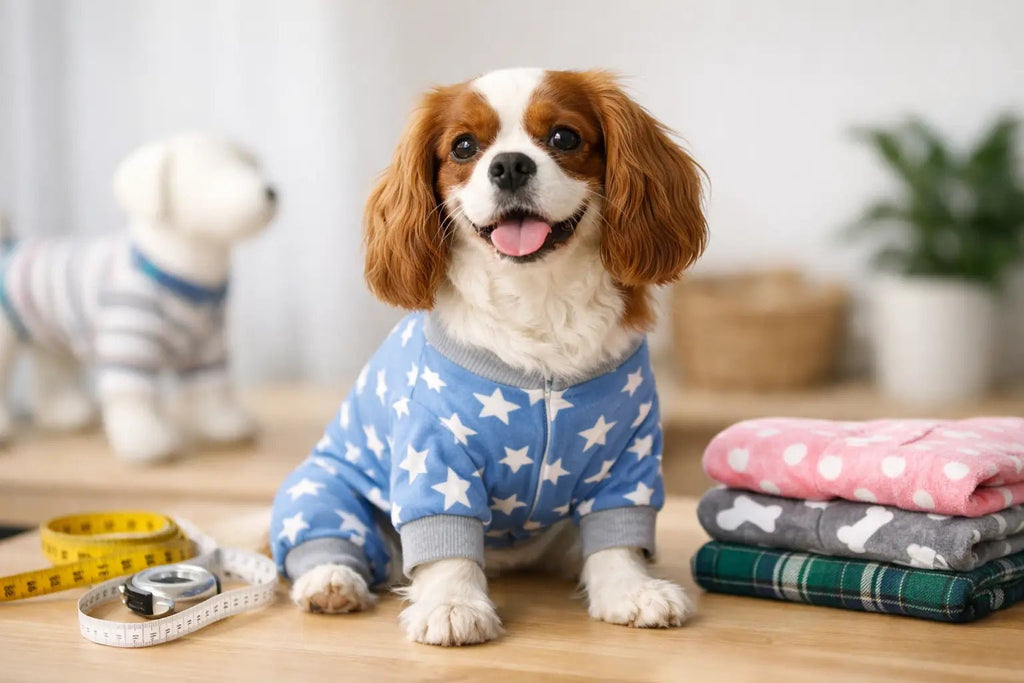
Dog Pajamas Sizing Chart for a Comfy Fit
A pair of dog pajamas can look adorable in the product photo, then arrive too snug around the chest or long enough for your dog to step on the back legs. A dog pajamas sizing chart helps prevent that frustrating moment. The goal is not simply finding a size labeled small, medium, or large. It is finding sleepwear that lets your dog stretch, curl up, walk to the water bowl, and settle in comfortably.
The best fit starts with a few simple measurements and a realistic look at your dog's body shape. With the right size, pajamas can offer cozy coverage for chilly nights, help protect sensitive skin from licking or scratching, and make quiet time feel even more comfortable.
Why dog pajama sizing matters
Dog clothing is not sized like human clothing. A 20-pound dog with a broad chest may need a larger pajama size than a 28-pound dog with a slim, long body. Breed labels and weight ranges can be helpful starting points, but they are not as dependable as measurements.
Pajamas that are too tight can rub under the front legs, restrict shoulder movement, or make bathroom breaks difficult. Ones that are too loose may twist while your dog sleeps, slide backward, or bunch at the legs. A good fit feels secure without looking stretched. Your dog should be able to sit, lie down, and take a few normal steps without the fabric pulling.
This matters even more for puppies, senior dogs, and dogs with mobility concerns. Puppies grow quickly, while older dogs may be less comfortable with tight elastic, stiff seams, or garments that are hard to step into. Soft, well-fitting pajamas support comfort without adding unnecessary fuss.
How to use a dog pajamas sizing chart
Before choosing a size, gather a soft measuring tape. If you do not have one, wrap a string around your dog, mark the spot where it meets, then measure the string with a ruler. Measure your dog while they are standing naturally, preferably when they are relaxed and not leaning or sitting.
Most dog pajamas sizing charts use three core measurements: back length, chest girth, and neck circumference. Some styles also include leg length or a recommended weight range.
Measure back length
Measure from the base of the neck, where a collar naturally rests, to the base of the tail. Keep the tape along your dog's back without pulling it tight. This is often the most useful measurement for full-coverage pajamas because it shows whether the body portion will be too short or too long.
If your dog falls between sizes and has a long body, prioritize back length when the pajama design includes rear-leg coverage. A garment that is noticeably short can pull forward and become uncomfortable around the shoulders.
Measure chest girth
Chest girth is the widest part of your dog's rib cage, usually just behind the front legs. Wrap the tape all the way around this area. This measurement is especially important for muscular breeds, barrel-chested dogs, and fluffy dogs whose coat adds extra volume.
A simple comfort check is the two-finger rule. Once the pajamas are on, you should generally be able to slide two fingers between the fabric and your dog's body. The fit should be close enough to stay in place, but never compress the chest.
Measure the neck
Measure around the base of the neck, not high up near the head. The neckline should rest comfortably and should not press into your dog's throat when they lower their head or lie down.
Neck measurements can be particularly helpful for dogs with wide heads or thick necks. If the pajama style has a pull-over design, make sure the neck opening has enough stretch for your dog to get in and out without stress.
A quick dog pajama fit guide
Use the chart provided with the specific pajama style you are considering, since sizes can vary between cuts and materials. As a general guide, compare your measurements this way:
| Measurement | What to look for |
| --- | --- |
| Back length | Close to your dog's neck-to-tail-base measurement without extending past the tail |
| Chest girth | Enough room for normal breathing, turning, and stretching |
| Neck | Snug but easy to slip over the head without tugging |
| Weight range | A helpful reference, but never the only measurement to use |
When one measurement points to a different size, chest girth usually deserves the most attention. A slightly longer body can often be manageable, but a too-tight chest can affect comfort and movement. The exception is a very long-bodied dog wearing a full-leg pajama style. In that case, choose the size that accommodates both chest and back length, or select a design made for longer bodies.
When to size up or size down
Sizing up is usually the better choice when your dog is between sizes, has a thick coat, has a broad chest, or prefers a little more freedom while sleeping. It can also help when the pajama fabric has little stretch. Look for adjustable closures, soft cuffs, or a flexible belly panel to help the larger size stay in place.
Sizing down may work when the fabric is very stretchy and your dog has a narrow frame. However, do not choose a smaller size just because you like a close-fitting look. Pajamas should be cozy, not compressive. If seams leave marks, the chest panel pulls, or your dog freezes or resists walking after you put them on, the fit is too small.
For growing puppies, measure again before ordering a second pair. Buying a little room to grow can be sensible, but pajamas that are overly loose can create a tripping hazard. A close check of the chart is worth more than guessing based on age or expected adult size.
Check the fit after your dog tries them on
A sizing chart gets you close. Your dog's movement tells you whether the fit is truly right. Put the pajamas on in a calm setting, offer a treat, and let your dog walk around for a few minutes. Watch the shoulders, belly, and rear legs as they move.
The pajamas should lie flat along the back and chest without twisting. The leg openings should not dig into the skin or catch at the joints. For styles with a belly opening, make sure it sits far enough forward or back to allow clean, easy bathroom breaks. This is particularly important for male dogs, and the placement varies by garment design.
Take the pajamas off if you notice heavy panting, repeated scratching, chewing at the fabric, a tucked posture, or any sign your dog is trying to escape the garment. Some dogs simply need time to get used to clothes, but discomfort should never be treated as something they need to tolerate.
Choose the pajama style for your dog's needs
The right size also depends on the style. A lightweight cotton blend with plenty of stretch may feel comfortable in a closer fit, while fleece pajamas or lined sleepwear often need a little more room. Full-body styles offer extra coverage, but they require more careful attention to back length, leg openings, and potty access.
For dogs who only need light warmth indoors, a sleeveless or short-sleeve pajama design may be easier to wear. Dogs with short coats, senior dogs, or pets recovering from mild skin irritation may appreciate more coverage, as long as the material is breathable and the fit does not rub. Pajamas are not a substitute for veterinary care, so contact your veterinarian if skin redness, persistent itching, or discomfort continues.
Wash new pajamas before the first wear with a pet-safe, fragrance-free detergent when possible. Clean, soft fabric is kinder to sensitive skin, and regular washing removes oils, loose hair, and everyday dirt. Always check the care instructions, since high heat can shrink some fabrics and change the fit.
Comfort is the best size label
A dog pajamas sizing chart is your best tool for buying with confidence, but the final test is simple: your dog should look relaxed and move like themselves. Measure the back, chest, and neck, compare each number to the style-specific chart, and give your pup a gentle movement check when the pajamas arrive.
At Souths Pet Supplys, we believe everyday comfort should be easy to find and easy to afford. Choose soft sleepwear that fits your dog's shape, keep an eye on how they move, and let every cozy nap feel like a little extra care.
Related post
04
Aug
02
Aug
01
Aug
29
Jul