
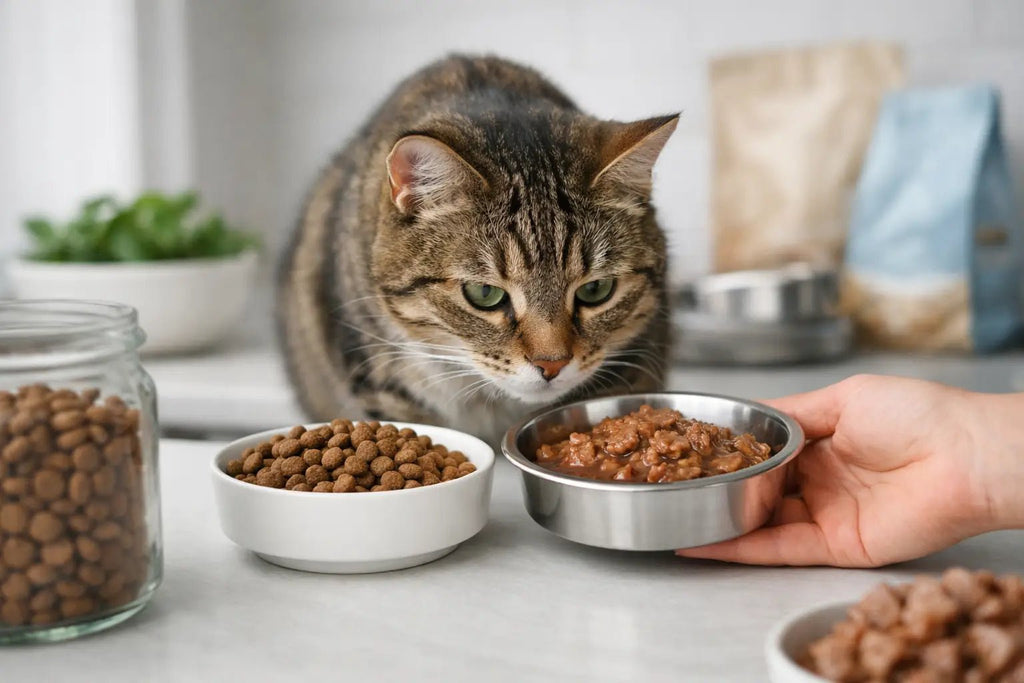
How to Introduce New Cat Food Safely
One day your cat cleans the bowl, and the next day they act like you served cardboard. That is usually how food changes begin. If you are wondering how to introduce new cat food without upsetting your cat’s stomach or starting a mealtime standoff, the good news is that most cats do best with a slow, steady transition.
Cats are creatures of habit, and their digestive systems can be just as picky as their preferences. A sudden switch can lead to vomiting, diarrhea, gas, or a full protest at the food bowl. Going slowly gives your cat time to adjust to the taste, smell, texture, and ingredients of the new food while helping you spot any problems early.
Why how to introduce new cat food matters
Changing cat food is not just about filling the bowl with something different. Your cat may be moving to a new life stage formula, a food for weight support, a sensitive stomach recipe, or simply a better fit for your budget and routine. Whatever the reason, the transition itself matters almost as much as the food you choose.
A slow introduction helps reduce digestive upset. It also lowers the chances that your cat will reject the new food completely. Some cats are naturally flexible, but many are not. Kittens may adapt faster, while older cats often need more patience. Cats with sensitive stomachs, food allergies, or a history of stress may need an even gentler pace.
How to introduce new cat food step by step
For most healthy cats, a 7 to 10 day transition works well. The idea is simple: mix a small amount of the new food into the current food, then gradually increase the new portion over several days.
A simple transition schedule
Start with about 75 percent old food and 25 percent new food for the first two to three days. If your cat is eating normally and their litter box habits stay normal, move to a half-and-half mix for another two to three days. After that, try 25 percent old food and 75 percent new food for a couple more days. Then move fully to the new food.
That timeline works for many cats, but it is not a rule carved in stone. If your cat seems hesitant, or if you notice mild digestive changes, slow it down. Stretch the process to two weeks if needed. It is better to take a few extra days than to rush and end up back at square one.
If you are switching dry to wet, or wet to dry
Texture can be a bigger hurdle than flavor. A cat used to dry kibble may be suspicious of wet food, especially if they have eaten the same thing for years. The same can happen in reverse.
When switching between dry and wet food, go even slower. You may need to begin with tiny tastes rather than full mixed meals. Some cats dislike soggy kibble, so mixing wet and dry in one bowl does not always work. In that case, offer a small side portion of the new texture alongside the regular food and build acceptance gradually.
Signs your cat is adjusting well
A smooth transition usually looks pretty boring, and that is a good thing. Your cat keeps eating, drinks normally, uses the litter box as usual, and acts like themselves. Mild curiosity about the new smell or a little slower eating is common in the first few days.
What you want to see is steady progress. If your cat eats most of the meal, has formed stools, and does not show signs of discomfort, you are likely on the right track.
Signs to slow down or call your vet
Some resistance is normal. Refusing one meal or picking around the new food does not always mean something is wrong. But there are times when you should pause the transition.
If your cat has repeated vomiting, persistent diarrhea, obvious belly pain, extreme lethargy, or stops eating for more than a day, contact your veterinarian. Cats should not go long without eating, especially overweight cats, because it can lead to serious health issues. If your cat has a medical condition like kidney disease, diabetes, or known food allergies, ask your vet for a feeding plan before making any changes.
It also helps to separate preference from intolerance. A cat who sniffs and walks away may simply dislike the flavor or texture. A cat who eats and then develops digestive upset may be reacting to the formula itself. Either way, forcing a fast switch rarely helps.
Common mistakes when introducing new cat food
The biggest mistake is changing food overnight. It feels efficient, but it often creates more stress for both you and your cat. Another common issue is offering too many options too quickly. If you switch brands, flavors, textures, and feeding times all at once, it becomes hard to tell what your cat is reacting to.
Portion size matters too. Some pet parents add a large scoop of new food because the cat seems interested at first, then get surprised when stomach upset shows up later. Small, measured changes are your friend.
Be careful with treats during the transition. If your cat is getting lots of extras, it can muddy the picture. If loose stools appear, you want to know whether the new food is the problem or whether a handful of treats played a part.
Tips for picky cats
Some cats make food changes feel personal. If your cat is picky, patience and routine usually work better than pressure.
Keep meals calm and predictable
Feed at the same times each day and place the bowl in a quiet area. Stress can affect appetite, so if the feeding space is noisy or chaotic, your cat may blame the new food for the discomfort.
Warm wet food slightly
A little warmth can make wet food smell more appealing. You want it slightly warm, not hot. This can help if your cat is interested but not quite convinced.
Use small portions
Large servings can overwhelm a hesitant eater. Smaller meals feel fresher and give you less waste if your cat turns up their nose.
Do not starve your cat into accepting it
It can be tempting to think hunger will win. With cats, that is risky. Some will simply refuse food longer than is safe. Gentle encouragement works better than a showdown.
Choosing the right new food in the first place
Learning how to introduce new cat food is only half the job. The other half is choosing a food that suits your cat’s age, health, and preferences.
Kittens need growth-focused nutrition, while adult cats need balanced maintenance formulas. Senior cats may benefit from recipes designed for aging bodies, though it depends on their health and your vet’s advice. Indoor cats, less active cats, and cats needing weight support may do better on specific formulas. If your cat has sensitivities, read the ingredient list carefully and avoid changing to a food with several completely unfamiliar ingredients at once.
Price matters too, especially when you are feeding a pet you love like family and still watching the household budget. A dependable food that your cat tolerates well and that fits your routine is often the best choice long term. That practical, comfort-first approach is part of what makes everyday pet care easier.
When a slower transition is the better choice
Some cats need more than 10 days. Senior cats, cats with sensitive stomachs, recently adopted cats, and cats dealing with household changes may all need a slower pace. If your cat has been stressed by travel, visitors, a new baby, or another pet, try to avoid switching food at the exact same time unless you have to.
There is a trade-off here. Sometimes you need to change food quickly because the old food is unavailable or a vet recommends a new diet right away. In that case, do the slowest transition you can manage and monitor closely. A perfect plan is great, but a realistic one is what actually helps.
How to make mealtime easier during the switch
Fresh water should always be nearby, especially if you are feeding more dry food or introducing a higher-fiber formula. Clean bowls regularly, because lingering smells from old food can affect how the new food is received.
If you feed multiple cats, watch each one separately if possible. One cat may adapt easily while another struggles. Free-feeding can make it harder to track who is eating what, so scheduled meals are often more useful during a food transition.
If you are stocking up on pet care basics, keeping the switch organized helps. Have enough of the old food on hand to complete the transition instead of running out halfway through. Planning ahead saves stress and makes the whole process feel more manageable.
At Souths Pet Supplys, we believe pet parenting should feel caring, simple, and affordable. A slow food transition may not be exciting, but it is one of those small everyday choices that can make your cat more comfortable and your routine a lot smoother.
If your cat needs time, give them time. The goal is not to win the food battle by tomorrow. It is to help them eat well, feel good, and come back to the bowl with confidence.
Related post

15
Jul

13
Jul
