
How Much Should a Cat Eat Daily?
That look your cat gives you at 6 a.m. can make it seem like breakfast is already late. But when you are trying to figure out how much should a cat eat daily, those dramatic stares are not the best guide. The right amount depends on your cat’s weight, age, activity level, body condition, and whether you feed dry food, wet food, or a mix of both.
For many adult cats, daily calories land somewhere between 20 and 30 calories per pound of body weight, but that is only a starting point. A lean, playful young cat may need more. A senior cat who naps most of the day may need less. Feeding the right amount matters because small daily overfeeding can add up fast, and extra weight can put stress on your cat’s joints, heart, and overall health.
How much should a cat eat daily based on weight?
If your cat is a healthy adult and already at a good weight, a simple estimate can help. Many indoor cats do well at about 20 calories per pound per day, while more active cats may need closer to 25 to 30 calories per pound. That means a 10-pound cat may need roughly 200 to 300 calories a day.
That range is wide for a reason. Two cats can weigh the same and still have different needs. One may race around the house, climb every shelf, and burn through energy. The other may prefer a sunny window and a long nap. Neutered and spayed cats also often need fewer calories than intact cats.
Body condition matters just as much as the number on the scale. If your cat has no visible waist, a rounded belly, or trouble grooming certain areas, the current portion may be too generous. If your cat’s ribs and spine are too easy to feel and they seem bony, the portion may be too small.
Calories matter more than scoop size
A lot of pet parents feed by habit. One scoop in the morning, one scoop at night, and done. The trouble is that one cup of one food can have a very different calorie count than one cup of another. Dry food is usually more calorie-dense than wet food, so a small measuring mistake can mean a big difference over time.
Always check the feeding guide on the label, then compare it with the calories per cup or per can. Feeding guides are helpful, but they are not perfect. They are general recommendations, not a custom plan for your cat.
If your cat eats treats, those calories count too. A few extras during the day may seem small, but they can quietly push your cat over their daily needs. As a good rule, treats should stay under 10 percent of total daily calories.
Wet food, dry food, or both?
This is where daily feeding gets a little more personal. Wet food can help with hydration and may help some cats feel fuller because of its moisture content. Dry food is convenient, often more affordable per serving, and easy to portion for puzzle feeders or automatic feeders.
Neither option is automatically perfect for every cat. What matters most is complete and balanced nutrition, the right calorie intake, and a feeding routine your household can actually stick to.
If you feed only wet food, your cat may eat multiple small meals a day made up of cans or pouches. If you feed only dry food, portion control becomes especially important because calories are concentrated in a smaller amount of food. If you feed a mix, add up the calories from both instead of guessing.
For example, if your cat needs 220 calories a day and gets 90 calories from wet food in the morning, the rest of the day’s dry food should fit into the remaining 130 calories. That sounds obvious, but it is one of the easiest places to accidentally overfeed.
How much should a cat eat daily at different ages?
Kittens need more food for their size than adult cats because they are growing fast. They usually do best with several small meals a day and a kitten formula designed for growth. Young kittens may need three to four meals daily, while older kittens may move toward two to three.
Adult cats usually do well with two measured meals a day, though some prefer smaller, more frequent meals. Meal feeding can make it easier to monitor appetite changes, which is helpful if your cat gets sick or starts eating less.
Senior cats can go either way. Some slow down and need fewer calories. Others lose muscle and need a more nutrient-dense diet to maintain condition. Appetite can also shift with age due to dental issues or health concerns, so a sudden change should not be brushed off as normal aging.
Indoor cats usually need less than outdoor cats
Most indoor cats are living the good life, with soft beds, steady temperatures, and food close by. That comfort is wonderful, but it also means they often burn fewer calories than outdoor cats or highly active indoor cats.
If your cat lives mostly indoors, portion control matters even more. Boredom can also look a lot like hunger. Some cats ask for food when they really want play, attention, or a little environmental enrichment. A short play session, a treat puzzle, or a new toy can sometimes solve the problem better than another handful of kibble.
At Souths Pet Supplys, that everyday comfort side of cat care matters just as much as nutrition. A cozy bed, interactive toys, and a steady routine can help support healthy habits that go beyond the food bowl.
Signs your cat may be eating too much or too little
Healthy feeding is not just about finishing the bowl. It is about how your cat looks, feels, and behaves over time.
A cat who is eating too much may gain weight gradually, become less active, have trouble jumping, or develop a sagging belly. Some cats also become very food-focused because free feeding keeps them grazing all day without much structure.
A cat who is eating too little may lose weight, seem low on energy, act hungrier than usual, or show a dull coat. In multi-cat homes, one cat may be stealing food while another is not getting enough, so separate feeding spots can make a big difference.
If your cat stops eating for a day or eats far less than usual, call your veterinarian. Cats are not built to go long without food, and fasts can become serious quickly.
A simple way to portion your cat’s meals
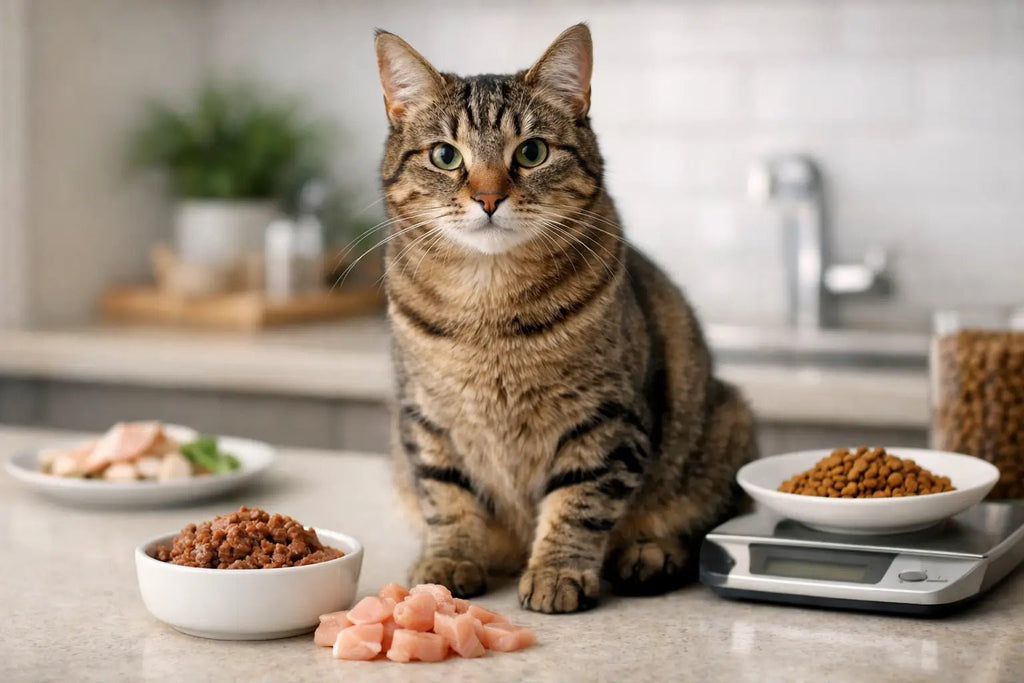
If you want a practical starting point, first check your cat’s current weight and the calorie content of the food. Then use the label feeding guide as a rough baseline. Measure meals with an actual measuring cup or kitchen scale instead of estimating by eye.
Feed that amount consistently for two to three weeks, then watch your cat’s weight and body shape. If your cat is gaining, trim the portion a little. If your cat is losing too much or seems genuinely hungry all the time, increase it slightly. Small changes work better than dramatic ones.
For homes with busy schedules, pre-portioning food for the day can help everyone stay on track. It also makes it easier to keep treats from creeping up unnoticed.
When to ask your vet for feeding help
Sometimes the answer to how much should a cat eat daily is not something you should guess. If your cat is overweight, underweight, pregnant, nursing, diabetic, vomiting often, or dealing with kidney, thyroid, or digestive issues, their feeding needs may be very different from standard guidelines.
Your vet can help set a target calorie goal and recommend the right food type for your cat’s health needs. That is especially helpful if you are trying to support safe weight loss, because cats need to slim down gradually.
The best feeding plan is one that keeps your cat at a healthy weight, fits your budget, and feels realistic for your day-to-day life. A measured bowl, a little label reading, and a close eye on your cat’s condition can go a long way. When your cat is well fed instead of simply well snacked, you are giving them something every pet parent wants to give more of - comfort, health, and many happy years ahead.
Related post



15
Jul

13
Jul
