
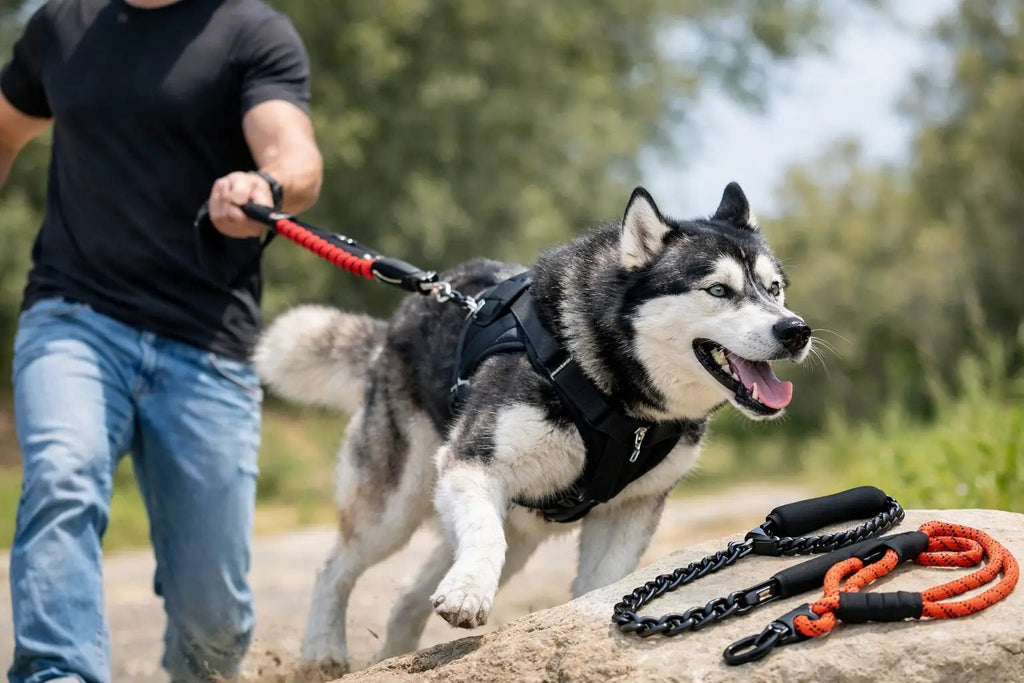
Best Dog Leash for Pulling: What Works
A walk stops feeling relaxing pretty fast when your dog hits the end of the leash and keeps going. If you are searching for the best dog leash for pulling, the real goal is not just control. It is comfort for your hand, better communication with your dog, and a safer, less stressful walk for both of you.
Pulling is common, especially with young dogs, large breeds, rescue dogs, or any pup that gets excited by squirrels, smells, or other dogs. The leash you choose will not solve pulling by itself, but it can make a huge difference in how manageable those daily walks feel. The right pick gives you more stability, reduces strain, and helps you guide your dog without turning every outing into a tug-of-war.
What makes the best dog leash for pulling?
The best leash for a puller usually has four things going for it: strength, grip, the right length, and dependable hardware. Those basics matter more than trendy extras.
Strength comes first. A leash for a dog that lunges or pulls needs durable stitching, solid clips, and material that does not fray quickly. Nylon is a popular choice because it is lightweight, affordable, and strong enough for most dogs. Rope leashes can also work very well, especially for medium to large dogs, because they tend to feel secure in the hand and hold up nicely over time.
Grip matters just as much. If your dog pulls hard, a thin leash can dig into your palm and make walks miserable. A leash with a padded handle or slightly thicker design can be a real relief. That is especially true for pet parents walking strong dogs every day.
Length is where many people get tripped up. A very short leash can feel restrictive and create more tension. A very long leash can give a pulling dog too much room to build momentum. For most pullers, a standard leash around 4 to 6 feet gives the best balance of control and freedom.
Then there is the clip. If the hardware feels flimsy in your hand, trust that feeling. A secure metal clasp is worth it because when a dog pulls suddenly, that little connection point does a lot of work.
The leash styles that help most with pulling
Not every leash style is a good fit for a dog that drags you down the sidewalk. Some are much better suited to training and everyday control.
Standard nylon leashes
For many dogs, a standard nylon leash is still the most practical option. It is simple, affordable, easy to clean, and available in different widths for different dog sizes. For pulling, the better versions are wider, sturdier, and have reinforced stitching with a comfortable loop handle.
This is often the best place to start if you want something budget-friendly that still gets the job done. A basic leash can work beautifully if the build quality is good.
Rope leashes
Rope leashes are a strong choice for dogs that pull hard. They are often easier to grip than flat leashes and can feel more secure during sudden lunges. Many pet parents also like that rope tends to hold its shape well and offers a little more hand comfort, depending on the thickness.
The trade-off is that some rope leashes can feel heavier, especially for small dogs. If your dog is tiny or you want a very lightweight setup, this may not be your first pick.
Double-handle leashes
If your dog pulls near traffic, around crowds, or when passing other dogs, a double-handle leash can be a smart upgrade. These leashes have a standard handle plus a second handle closer to the clip, giving you quick close-range control when you need it.
That extra handle can make a big difference in busy areas. It does not train your dog not to pull, but it can help you manage strong moments with less panic and more confidence.
Hands-free leashes
Hands-free leashes can be useful for well-trained dogs, but they are not always the best dog leash for pulling. If your dog is still lunging or surging forward, that force transfers to your waist or hips. For some people, that feels steadier. For others, it feels even harder to control.
These are better for dogs that are already making progress with loose-leash walking. For a serious puller, a traditional handheld leash is usually the safer choice.
Retractable leashes
For pullers, retractable leashes are usually not the answer. They can encourage constant tension because the dog keeps learning that pulling gets more distance. They also make quick control harder if your dog suddenly charges toward something.
For calm neighborhood walks with a dog that already has great leash manners, retractables can have a place. For dogs that pull, lunge, or zigzag, they are rarely the safest or easiest option.
Best leash length and width for a pulling dog
A leash that is too narrow can be hard on your hands and may not feel secure with a strong dog. A leash that is too bulky can feel awkward for a small breed. Matching leash size to your dog matters more than many people realize.
For small dogs, a lighter leash is usually best because it keeps walks comfortable without weighing them down. For medium and large dogs, a wider leash gives better durability and a more secure hold. If your dog is powerful, reactive, or very energetic, thicker material is often worth it.
As for length, 6 feet is a reliable everyday choice. It allows enough room for sniffing and normal movement while still giving you control. If your dog is a heavy puller and you are working on training, a 4-foot leash can sometimes help keep things more manageable in the short term.
Material matters more than you think
When people shop for leashes, they often focus on color or style first. That is understandable, but material has a bigger effect on daily comfort and performance.
Nylon is one of the most common choices because it is affordable and easy to maintain. It works well for everyday walks and comes in many widths and patterns. Still, cheaper nylon can feel rough or wear out faster, so quality makes a difference.
Rope is often great for stronger dogs because it feels durable and dependable. Leather can also be an excellent option because it softens over time and feels comfortable in the hand, but it usually costs more and needs a little more care.
If value matters to you, and for most families it does, a well-made nylon or rope leash often gives the best mix of performance and price.
The leash is only part of the setup
If your dog pulls a lot, the leash should work with the right collar or harness. This is where many walks improve quickly.
A standard back-clip harness can be comfortable, but on some dogs it gives them more leverage to pull. A front-clip harness often helps redirect that forward momentum and can make training easier. For some dogs, a properly fitted flat collar works fine, but for heavy pullers, a harness is often gentler and easier to manage.
The key is fit. Even the best dog leash for pulling will not feel helpful if the harness shifts, rubs, or allows your dog to slip out. Safe, comfortable equipment creates calmer walks from the start.
How to choose the right leash for your dog
Think about your real daily routine, not an ideal version of it. If you walk in quiet neighborhoods, your needs may be different from someone navigating apartment hallways, city sidewalks, or crowded parks.
If your dog is large and strong, prioritize durability and handle comfort. If your dog pulls most when excited, a double-handle leash may make life easier. If you are on a budget, a sturdy nylon leash with solid hardware is often a smart choice that covers the essentials without overcomplicating things.
It also helps to be honest about your dog’s behavior right now. Some products sound convenient, but convenience is not the same as control. A simple, strong leash usually beats a fancy one that does not match your dog’s walking habits.
At Souths Pet Supplys, that practical, comfort-first approach is what helps pet parents shop with more confidence. You do not need the most expensive option. You need one that feels safe, comfortable, and reliable every time you head out the door.
A few mistakes to avoid
One common mistake is choosing a leash based only on looks. Cute matters, but if your hand hurts after ten minutes, it is not the right leash. Another is buying a leash that is too long too soon, especially when your dog is still learning walking manners.
It is also easy to expect the leash to fix the pulling on its own. The best leash helps you manage the behavior, but training is still part of the picture. Even a few minutes of consistent practice during each walk can help your dog learn that staying closer gets them where they want to go.
A calmer walk often starts with simple choices: a strong leash, a comfortable grip, the right length, and gear that fits your dog well. When those pieces come together, every walk has a better chance of feeling less like a struggle and more like the happy daily routine you and your dog both deserve.
Related post


15
Jul
13
Jul
