
Slow Feeder Versus Bowl: Which Is Better?
If your pet finishes dinner before you have time to put the food bag away, the slow feeder versus bowl question is worth asking. Some dogs gulp meals in seconds. Some cats eat too fast, then wander off only to come back acting hungry again. The right feeding setup can make mealtime calmer, safer, and more comfortable without making your daily routine harder.
Slow feeder versus bowl: what changes at mealtime?
A regular bowl is exactly what it sounds like - open, simple, and easy to fill and clean. For many pets, that is perfectly fine. If your dog or cat eats at a normal pace, digests well, and stays relaxed around food, a standard bowl may be all you need.
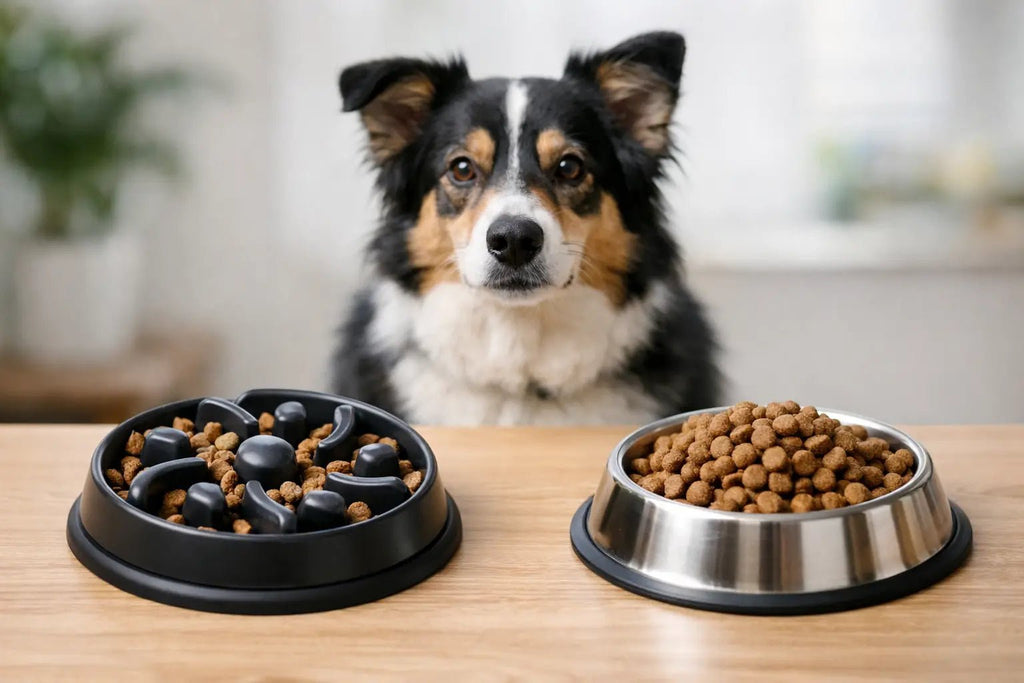
A slow feeder is designed to make eating take longer. It usually has ridges, grooves, or puzzle-like patterns that force a pet to work around obstacles to reach the food. That extra effort can slow down gulping and turn meals into a more paced activity.
The biggest difference is not just speed. It is the eating experience. A regular bowl allows quick access. A slow feeder adds a little challenge. For some pets, that challenge is helpful. For others, it is annoying, stressful, or simply unnecessary.
When a regular bowl is the better choice
There is a lot of excitement around slow feeders, but a standard bowl should not be treated like the wrong option. Plenty of pets do very well with a basic bowl, especially when their eating habits are already balanced.
If your pet eats slowly on their own, chews comfortably, and does not show signs of stomach upset after meals, a regular bowl keeps things easy. It is also often the better choice for senior pets with reduced vision, flat-faced breeds that struggle with awkward shapes, and pets who become frustrated by too much mealtime difficulty.
Regular bowls also make portioning simple. You can see the food clearly, clean the bowl quickly, and keep the feeding routine predictable. For busy households, that convenience matters. Pet care should support wellness, but it also has to work in real life.
Material matters here too. A well-made bowl in stainless steel or sturdy ceramic is often a smart everyday option because it is durable, easy to sanitize, and less likely to hold odors.
When a slow feeder makes more sense
Some pets treat mealtime like a race. That is where a slow feeder can really help. Dogs that inhale kibble, cough while eating, or seem bloated and uncomfortable after meals may benefit from a slower pace. Cats who scarf down food and then vomit shortly after eating can also do better when meals are spread out by design.
A slow feeder can also add mental stimulation. For high-energy dogs especially, even a small challenge at mealtime can make feeding feel more engaging. It is not a replacement for walks, play, or training, but it can be one useful part of a fuller routine.
That said, slower is not always automatically better. If the feeder design is too difficult, some pets may paw at it, flip it, or give up. Others may become anxious if they are highly food-motivated and cannot access their meal fast enough. The goal is gentle pacing, not frustration.
Slow feeder versus bowl for dogs
Dogs are usually the biggest reason pet parents compare these two options. Fast eating is common, especially in multi-dog homes, rescue dogs with a history of food insecurity, and enthusiastic breeds that approach every meal like a major event.
For a dog that gulps, a slow feeder can reduce speed and encourage smaller mouthfuls. That may help with burping, regurgitation, and general post-meal discomfort. It can also make feeding feel less frantic, which is a nice change for both pet and owner.
But there are trade-offs. Some large dogs push lightweight feeders across the floor. Some dogs with short snouts struggle to reach food in deep maze patterns. Puppies may need a simple design at first instead of a complicated one. If you choose a slow feeder for a dog, the best fit is usually stable, easy to clean, and challenging without being extreme.
If your dog already eats normally, keeps food down, and stays relaxed, there may be no reason to switch from a regular bowl just because slow feeders are popular.
Slow feeder versus bowl for cats
Cats are a little different. Many cats prefer easy access to food and can be picky about bowl shape, depth, and whisker contact. A standard bowl that is wide and shallow is often a strong choice because it supports comfortable eating without crowding the face.
Still, some cats eat far too fast, especially in homes with multiple pets or competitive feeding routines. In those cases, a slow feeder can help, but it needs to be cat-friendly. If the design is too deep or awkward, many cats will simply dislike it.
For wet food, this becomes even more important. Narrow spaces and hard-to-clean corners can turn into a mess quickly. A cat slow feeder should be simple enough to clean thoroughly and shallow enough to let a cat eat without strain.
Signs your pet may need a slower feeding setup
You do not need a dramatic problem to consider a slow feeder, but a few common patterns can point you in that direction. Your pet may benefit if they regularly finish meals in under a minute, seem gassy or uncomfortable after eating, vomit soon after meals, or act overly frantic around food.
On the other hand, if your pet grazes calmly, leaves food behind, or takes their time naturally, forcing a slower feeder may solve nothing. It may just make meals less pleasant.
Choosing the right option for your home
The best choice depends on your pet's eating style, age, breed, and temperament. It also depends on your routine. A feeding solution only works if you can use it consistently and keep it clean.
If you are deciding between a slow feeder and a regular bowl, start with the simplest question: what problem are you trying to solve? If the issue is speed, a slow feeder may help. If the issue is hygiene, durability, or comfort, a better-quality regular bowl might be the smarter move.
It also helps to think about food type. Dry kibble often works well in slow feeders. Wet food can be trickier unless the feeder is designed with shallow, smooth channels. For mixed feeding, ease of cleaning should be high on your list.
A non-slip base is useful either way. So is a size that matches your pet's portion needs. Bowls that are too deep, too light, or too cramped can create problems no matter which style you choose.
How to switch without stressing your pet
If you want to try a slow feeder, ease into it. Start with one meal a day or use a design with gentle ridges instead of a complicated maze. Let your pet learn the pattern without pressure.
Watch how they respond. If they seem calmer and more comfortable, that is a good sign. If they become agitated, stop eating, or seem confused in a way that does not improve, the feeder may not be the right fit.
For pets who need some pacing but dislike full slow feeders, there is a middle ground. Smaller meal portions, feeding meals more often, or using a broader bowl shape can sometimes help without changing the mealtime experience too much.
At Souths Pet Supplys, we know the best pet care products are the ones that make everyday life easier while helping pets feel their best. Feeding should support health, comfort, and a little more peace around the food bowl.
Which one is better?
The honest answer is that neither option wins every time. In the slow feeder versus bowl decision, the better choice is the one that matches your pet. A slow feeder is great for fast eaters who need pacing and a bit of enrichment. A regular bowl is great for pets who already eat well and benefit from a simple, comfortable setup.
You are not choosing the trendier option. You are choosing the more helpful one. And when mealtime fits your pet's needs, everything around it gets easier - less mess, less worry, and a happier pet waiting for dinner tomorrow.
Related post
15
Jul
13
Jul
