How to Store Pet Food the Right Way
That bag of kibble tucked beside the laundry room wall might seem fine until your dog suddenly turns up their nose at dinner or your cat starts picking around the bowl. If you have ever wondered how to store pet food so it stays fresh, safe, and worth the money you spent, the answer is simpler than most pet parents think - but a few small mistakes can make a big difference.
Pet food storage is really about protecting three things: freshness, nutrition, and safety. Air, moisture, heat, and pests all work against your food once the package is opened. And while dry food usually looks sturdy enough to handle almost anything, it can go stale faster than many people realize. Wet food has its own rules, especially once opened. Treats, toppers, and fresh or refrigerated food need a little extra attention too.
How to store pet food without losing freshness
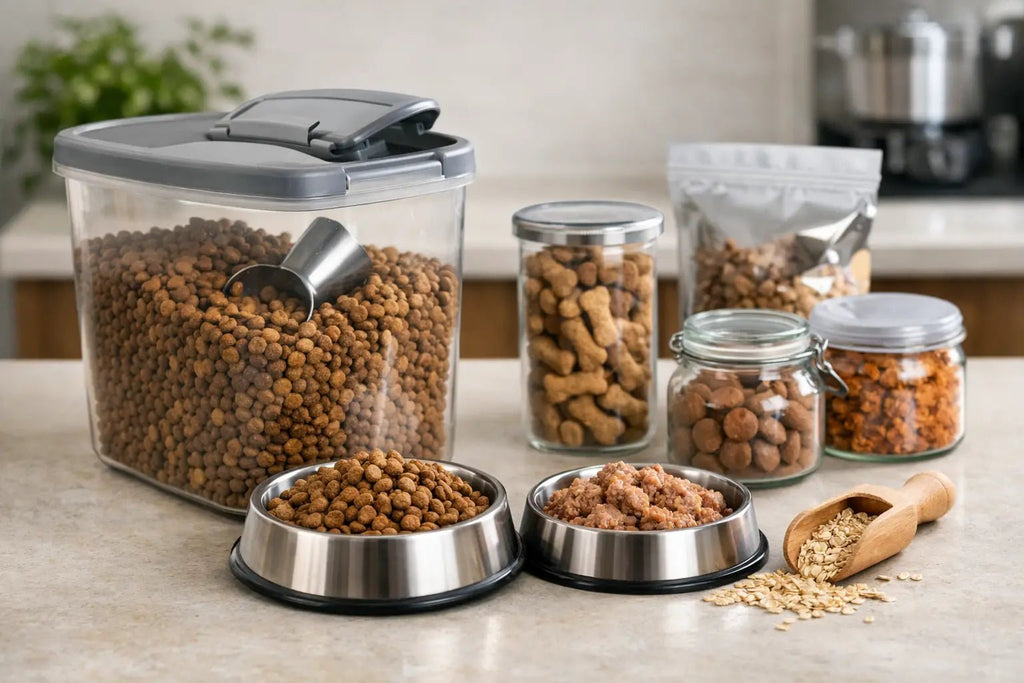
The best place to start is with the original packaging. Dry dog and cat food bags are usually designed with a protective lining that helps slow down exposure to air and light. That means pouring kibble directly into a random bin is not always the smartest move, even if it looks tidier in the pantry.
A better option is to keep the food in its original bag and place the entire bag inside an airtight container. This gives you the benefit of the manufacturer packaging plus extra protection from humidity, insects, and curious noses. It also helps you keep the lot number and expiration date handy, which matters if there is ever a recall or a quality concern.
Where you store the container matters just as much as what you store it in. A cool, dry indoor space is ideal. Think pantry, kitchen cabinet, or climate-controlled closet. Garages, sheds, and porches are less reliable because temperatures swing more than most people think. Heat can speed up spoilage, and moisture can encourage mold or clumping.
If you buy large bags to save money, that can absolutely make sense - but only if your pet goes through the food fast enough. Once a bag is open, freshness starts to decline. For many households, buying a slightly smaller bag more often is a better balance between value and quality. It depends on how many pets you have, how much they eat, and how quickly you can finish the bag.
Dry food storage mistakes pet parents make
One common mistake is leaving the top of the bag loosely folded over with a clip and calling it done. That is better than nothing, but it still allows air in every time the bag is opened. Another issue is storing food near appliances that produce heat, like ovens, dryers, or water heaters. Even if the room feels normal, repeated warmth can shorten shelf life.
Some pet parents also mix old food and new food together in the same container. It seems practical, but leftover crumbs and oils from the older batch can affect the newer food. If you refill a container, clean and dry it first. That extra minute helps keep each new bag fresher.
Then there is the question of whether plastic containers are safe. They can be, as long as they are food-safe, sturdy, and cleaned regularly. Still, the original bag-inside-container method is often the safest and easiest choice. It reduces direct contact with container surfaces and makes routine cleanup simpler.
How to store wet pet food safely
Wet food needs a different routine because once opened, it spoils quickly. If your dog or cat does not finish the can or tray in one meal, transfer the leftovers to an airtight container or cover the original container tightly and refrigerate it right away.
Most opened wet food should be used within a few days, depending on the product and storage conditions. If it smells off, dries out, changes color, or looks separated in an unusual way, it is better to throw it out. Saving a few bites is not worth upsetting your pet's stomach.
Unopened wet food should also be stored in a cool, dry place. There is no need to refrigerate it before opening unless the label says otherwise. Just avoid keeping it in places with high heat or freezing temperatures. Cans that are bulging, leaking, or badly dented should not be used.
If your pet prefers warm food, do not leave wet food sitting out to reach room temperature for long periods. Instead, serve a smaller portion and return the rest to the fridge. You can warm refrigerated wet food slightly by letting it sit for a short time before feeding or using a pet-safe serving approach in small amounts.
Treats, toppers, and specialty diets need storage attention too
Treats often get overlooked because they seem shelf-stable, but they can also lose texture and flavor if left open too long. Reseal the package tightly or move treats to an airtight container if the original bag does not close well. Keep them in a dry spot away from sunlight, especially soft treats that can dry out or become sticky.
Freeze-dried foods and toppers are especially sensitive to moisture. If steam from cooking, sink splashes, or humidity gets in, the texture can change quickly. The same goes for dental chews and jerky-style treats. A sealed bag tossed into the car or left in a warm mudroom can age faster than expected.
Fresh, frozen, or refrigerated pet foods follow the strictest rules. These products are often made with fewer preservatives, which can be a plus for some pets, but it also means timing matters more. Follow the label closely for refrigeration, freezing, thawing, and use-by guidance. This is one of those areas where "close enough" storage can turn into waste pretty quickly.
Signs pet food is no longer good
Even if the expiration date has not passed, pet food can still go bad if it was stored poorly. With dry food, watch for a stale or oily smell, visible mold, pest activity, or an unusual texture. With wet food, any sour odor, film, discoloration, or swelling in the package is a red flag.
Pets sometimes notice quality changes before we do. If your normally food-motivated dog suddenly hesitates or your cat sniffs and walks away, take a second look at what you are serving. Of course, picky eating can have many causes, so this is not a diagnosis by itself. But freshness is one of the easiest things to check first.
Smart storage habits that save money
Learning how to store pet food well is not just about safety. It also helps reduce waste, which matters for busy families trying to keep pet care affordable. Throwing out stale kibble, dried wet food, or bug-exposed treats adds up over time.
A few practical habits go a long way. Buy a size your pet can finish while it is still fresh. Keep food sealed between meals. Scoop with a clean, dry scoop instead of a wet cup from the sink. Check expiration dates before stocking up on deals. And if you use storage bins, wash and dry them fully before adding a new bag.
This is also a good time to think about where feeding supplies live in your home. If food, treats, bowls, and scoops are organized in one clean area, daily care gets easier. That kind of setup helps you notice sooner when food is getting low, packaging is damaged, or something does not smell right.
For multi-pet homes, labeling food can help prevent mix-ups, especially if one pet eats a prescription or sensitive-stomach formula. Convenience matters, but accuracy matters too. The easier your system is to follow, the more likely everyone in the house will stick to it.
The best place to store pet food at home
For most homes, the best storage spot is indoors, out of direct sunlight, and away from humidity. A pantry shelf, laundry room cabinet, or kitchen storage nook can work well if temperatures stay steady. The goal is to protect the food from heat swings and moisture, not just hide it out of sight.
If space is tight, choose a compact airtight container and avoid overbuying. If you have room for bulk purchases, make sure the food will actually be used within a reasonable time after opening. Bigger is not always better if freshness drops before the bag is finished.
At Souths Pet Supplys, we know pet parenting is easier when the basics are simple, safe, and budget-friendly. Good food storage is one of those small everyday habits that helps keep tails wagging, whiskers happy, and your routine running smoothly.
A little care at the storage stage makes every scoop count, and your pet gets the fresh meal they deserve.
Related post
11
Jun
09
Jun
07
Jun